Why Phishing Still Works — Even When We Know the Tricks
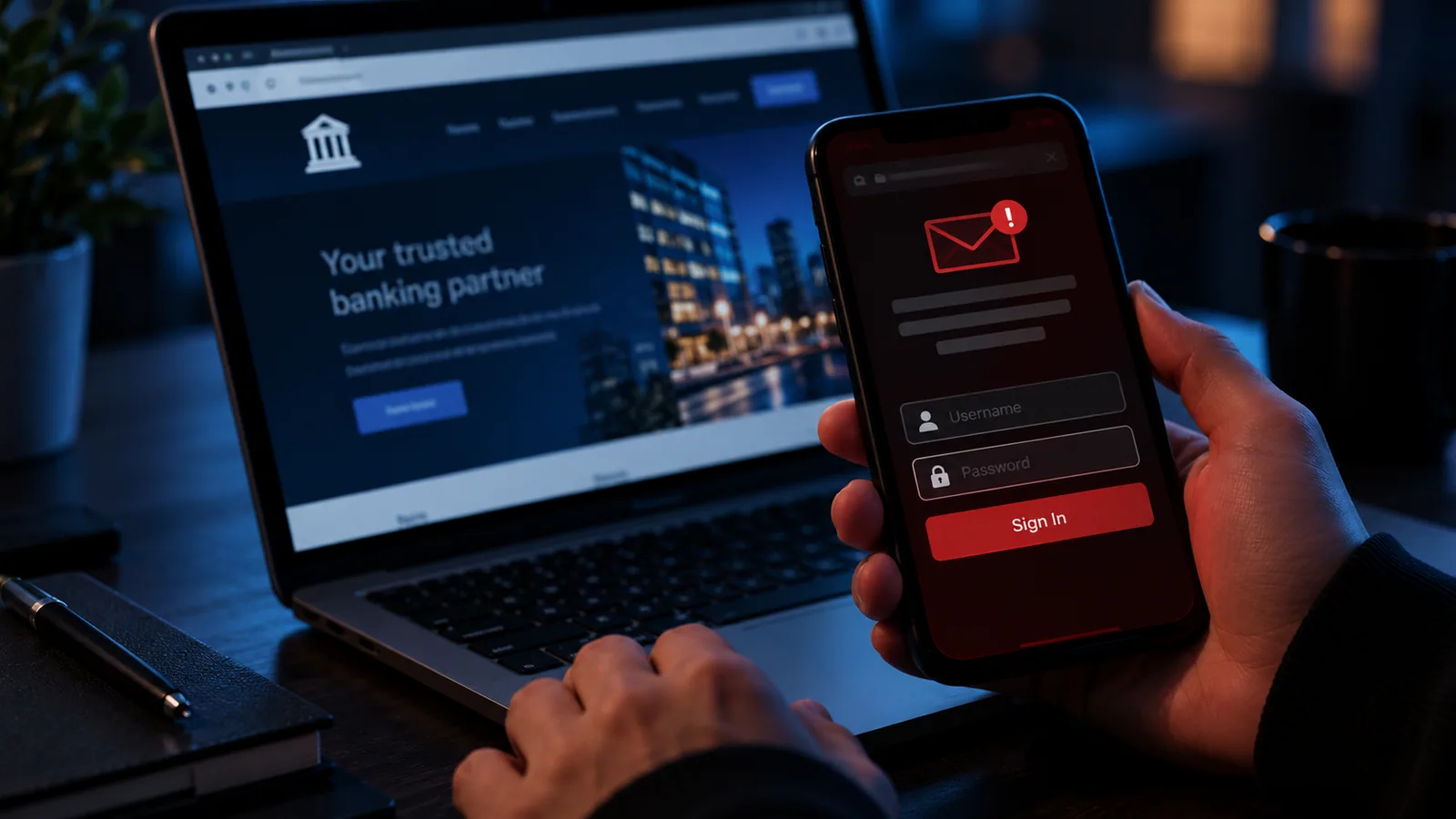
Imagine receiving a message from your bank. It looks professional. The logo is correct, the language is convincing, and the message warns you about suspicious activity on your account.
There is a button asking you to verify your identity.
You know phishing exists. You have heard the warnings. You might even consider yourself careful online.
But what if the message arrives while you are distracted, worried about your money, or trying to finish something important?
That is exactly the kind of situation phishing attacks are designed to exploit.
Phishing is not simply a problem of people being careless. It is a problem of trust, timing, and human decision-making in a digital world where almost everything demands our attention.
Phishing Is About Trust, Not Just Technology
A phishing attack is an attempt to persuade someone to reveal sensitive information, visit a fraudulent website, download a malicious file, or take another action that benefits an attacker.
The attacker does not necessarily need to break into a computer system.
Instead, they may convince someone to open the door voluntarily.
A fraudulent email can imitate a bank. A text message can claim that a delivery has failed. A social media message can appear to come from a friend or colleague.
The goal is to make an unexpected request feel legitimate.
That is why phishing is often described as a form of social engineering: the attacker targets human behavior rather than relying entirely on a technical vulnerability.
Why Knowing About Phishing Is Not Enough
Most people know that suspicious links can be dangerous.
Yet knowing a security rule and applying it consistently are two different things.
Consider the number of digital interactions people handle every day: work emails, payment confirmations, password resets, delivery notifications, banking alerts, and messages from unfamiliar contacts.
Many legitimate services also use urgent language.
A genuine account-security notification might require attention. So might a real fraud alert or an expiring payment.
Attackers take advantage of that overlap.
They design messages that resemble ordinary digital communication, making fraudulent requests harder to distinguish from legitimate ones.
The challenge is not merely recognizing something unusual. It is deciding whether a particular message deserves trust.
The Power of Urgency
One of the most effective elements of phishing is urgency.
A message might claim:
Your account will be suspended unless you act immediately.
Someone has attempted to access your bank account.
An important package cannot be delivered.
An unexpected payment requires confirmation.
Your employer needs sensitive information right away.
These messages encourage people to react before verifying the situation.
Fear, curiosity, authority, and the desire to solve a problem can all influence how quickly someone makes a decision.
The Federal Trade Commission warns that scammers frequently impersonate familiar organizations and use account problems, payment issues, or suspicious activity as reasons to request action.
The underlying strategy is simple: make the requested action feel more urgent than the need to verify it.
A Professional-Looking Message Is Not Proof of Authenticity
Phishing messages are not always full of spelling mistakes or obvious visual errors.
A convincing message may include polished writing, a familiar logo, and language resembling real customer support communication.
The appearance of professionalism tells you very little about who actually sent it.
Even the sender's displayed name can be misleading.
A message may appear to come from a trusted organization while directing users to a different website.
And a fraudulent website can be designed to resemble a legitimate login page.
This creates an important distinction: a message can look authentic without being authentic.
The correct question is not simply, "Does this look real?"
It is, "Can I independently verify where this request came from?"
What Happens When Someone Clicks?
Clicking a suspicious link does not automatically mean an attacker has gained control of a device.
The outcome depends on the website, the device, the browser, and what happens next.
Some links lead to imitation login pages designed to steal usernames and passwords.
Others may encourage users to download malicious software.
Some attacks attempt to collect financial information, authentication codes, or other sensitive data.
An attacker may also use information gathered during one interaction to make later attempts more convincing.
This is why the consequences of phishing vary considerably.
Not every suspicious message leads to a successful compromise, but a single successful attempt can expose valuable information.
Why Passwords Alone Are Not Enough
A strong password is important, especially when it is unique to each account.
However, a strong password cannot protect an account if its owner voluntarily enters it into a fraudulent login page.
This is one reason multifactor authentication matters.
An additional authentication factor can make account takeover harder even if a password is stolen.
But not every authentication method provides the same protection.
Some phishing attacks can trick users into sharing one-time verification codes.
Modern phishing-resistant methods, including properly implemented passkeys based on FIDO2 and WebAuthn, offer stronger protections against fraudulent login sites.
The National Institute of Standards and Technology distinguishes phishing-resistant authentication from methods that rely on users recognizing an impostor.
The lesson is important: security should not depend entirely on a person noticing every deception.
How to Protect Yourself Without Becoming Paranoid
The goal is not to distrust everything on the internet.
It is to develop verification habits that work even when a message seems convincing.
Open important accounts independently.
If you receive an unexpected banking alert, open your bank's official app or enter its known website address yourself instead of following the message's link.
Use unique passwords.
A password manager can help generate and store different passwords for different accounts. That limits the damage when one password is exposed.
Enable strong authentication.
Use passkeys or other phishing-resistant authentication when available. Otherwise, enable the strongest multifactor authentication supported by the service.
Keep software updated.
Security updates help reduce exposure to known vulnerabilities that may be exploited through malicious websites or downloads.
Verify unusual requests through a separate channel.
If a colleague unexpectedly requests sensitive information or a payment, contact them using a trusted method you already know.
Report suspicious messages.
Reporting suspicious communication can help organizations identify and respond to attempted attacks.
None of these steps guarantees perfect security, but together they significantly improve a person's ability to resist common attacks.
The Real Weakness Is Often the Moment of Decision
Technology can verify identities, encrypt information, detect malicious activity, and block many threats automatically.
But people still make decisions inside those systems.
A familiar name, an unexpected warning, or an urgent deadline can influence those decisions.
Phishing succeeds when an attacker creates a situation in which an unsafe action feels reasonable.
That does not mean human beings are inherently incapable of protecting themselves.
It means security systems should be designed around how people actually behave, including when they are tired, distracted, or under pressure.
Conclusion: Security Begins With Verification
Phishing remains effective because it attacks something deeper than software: the assumptions people make about trust.
Better technology helps. Strong authentication helps. Training and awareness help.
But the most useful habit is learning to separate a message's appearance from its authenticity.
An email does not become trustworthy because it uses the right logo.
A link does not become safe because it appears in an urgent notification.
And an unexpected request does not become legitimate simply because it claims to come from someone important.
The strongest defense is not the ability to recognize every scam. It is having reliable ways to verify important requests before acting on them.