The False Comfort of the SMS Code
You know the ritual. You enter your username and password into your bank's website. A loading spinner appears. Then your phone vibrates. A text message arrives containing a six-digit code. You type those numbers into the waiting field. Access granted. Your account loads. The money is there. Everything is secure.
This moment feels safe. The code arriving on your phone seems like proof of identity. The bank sent it directly to your device. Only you have access to your phone. The two-factor authentication is working. You are protected by modern security architecture. You have followed best practices. You have done everything right.
This feeling of security is a dangerous illusion.
For over a decade, the technology industry sold SMS-based Two-Factor Authentication as the gold standard of account security. Banks mandated it. Social media platforms implemented it. Email providers pushed it as essential protection. The narrative was simple and compelling: something you know plus something you have equals unbreakable security. Your password is something you know. Your phone receiving the SMS code is something you have. Together, they create a security barrier that attackers cannot penetrate.
This narrative was always a lie.
The fundamental flaw is treating your phone number as a secure possession. Your phone number is not a cryptographic key. It is not a physical token under your exclusive control. It is a public identifier assigned to you temporarily by a telecommunications company whose primary business is connectivity, not security. That number can be reassigned. It can be ported to another device. It can be hijacked through social engineering, through bribery, through protocol exploitation, through regulatory processes that were never designed with adversarial threat models in mind.
The phone number as security token is built on ancient telecommunications infrastructure that predates the internet, predates modern cryptography, predates any conception of the threat landscape we inhabit today. The systems that route your calls and messages were designed in an era when the primary threat was eavesdropping by government agencies with physical access to telephone switches. They were never architected to resist determined attackers with internet connectivity, leaked databases of personal information, and access to corrupt insiders within telecommunications companies.
SMS itself is fundamentally insecure. The messages are not encrypted in transit. They pass through multiple intermediary systems. They can be intercepted at the carrier level, at the SS7 signaling level, at various points in the global telecommunications infrastructure. The delivery mechanism was designed for reliability and universal compatibility, not for confidentiality or authentication.
But the deeper vulnerability is not technical. It is psychological. We trust our phone numbers because we have used them for decades. They feel personal. They feel permanent. When someone calls your number, you answer because it is your number. When a code arrives at your number, you trust it because the code came to you. This psychological ownership creates a false sense of security that attackers exploit ruthlessly.
The telecommunications companies facilitated this illusion. They implemented customer service procedures that allow phone numbers to be transferred between accounts and between carriers. These procedures exist for legitimate reasons. People change phones. They switch carriers. They lose devices. There must be mechanisms for transferring service. But these mechanisms assume that anyone successfully navigating the transfer process is the legitimate account holder. That assumption is fatally flawed.
The verification procedures are based on knowledge authentication. Security questions. Date of birth. Social Security number. Mother's maiden name. Billing address. This information is supposed to be secret, known only to the account holder. But in an age where hundreds of millions of records have been breached, where entire databases of personal information are sold on criminal forums for cryptocurrency, where social media profiles volunteer biographical details freely, these secrets are not secret at all.
Every major data breach makes SIM swapping easier. Every time a company loses customer data, attackers gain ammunition for social engineering. The Equifax breach alone exposed sensitive information for nearly half the United States population. That information enables SIM swapping at scale.
And so we arrive at the current state: SMS-based two-factor authentication is security theater. It provides a comforting ritual that makes users feel protected while offering minimal resistance to determined attackers. The six-digit code arriving on your phone is not proof of your identity. It is proof that whoever controls your phone number can receive messages sent to it. And control of your phone number is far easier to obtain than you have been led to believe.
The false comfort of the SMS code has cost victims millions of dollars. Life savings drained. Cryptocurrency wallets emptied. Investment accounts liquidated. Identities stolen. Credit destroyed. And through it all, the victims followed best practices. They enabled two-factor authentication. They did what they were told would keep them safe. The security failed not because they were careless, but because the security mechanism itself is fundamentally broken.
Your phone number is not a security token. It is a vulnerability. And that vulnerability is being exploited at industrial scale by criminals who understand that the telecommunications infrastructure your security depends on was never built to resist them.
The Anatomy of a SIM Swap Attack
The attack begins with reconnaissance. The attacker has selected a target. Perhaps the target is known to hold cryptocurrency. Perhaps they have been identified through social media posts showing wealth. Perhaps they appeared on a leaked database linking their phone number to valuable accounts. The specific selection criteria vary, but the preparation is methodical.
The attacker compiles information about the target. Full name. Date of birth. Current address. Previous addresses. Email addresses. Social Security number or equivalent national identifier. Mother's maiden name. Answers to common security questions. Much of this information is available from data breaches. Billions of records have leaked over the past decade. Entire databases are searchable. The attacker cross-references multiple breaches to build a comprehensive profile.
Social media provides additional intelligence. The target's Facebook profile lists their high school and graduation year. Their LinkedIn shows employment history. Their Instagram tags locations they frequent. Their Twitter reveals personal details in casual conversations. This information supplements the breach data, filling gaps, providing current details, offering context that makes the social engineering more convincing.
With the dossier complete, the attack begins. The attacker calls the telecommunications company's customer service number. They claim to be the target. They explain that they lost their phone or that it was damaged or stolen. They need their number transferred to a new SIM card. They have purchased a new device and need service activated.
The customer service representative follows protocol. They ask verification questions. What is your name? The attacker provides it. What is your date of birth? The attacker has it from breach data. What is the billing address? The attacker recites it perfectly. What is the last four digits of your Social Security number? The attacker knows. The account PIN? The attacker might have obtained it from previous breaches or might claim to have forgotten it, triggering alternative verification procedures.
Some representatives are more thorough than others. Some are skeptical. Some follow strict procedures. But telecommunications companies process millions of these requests. Representatives are evaluated on call handling time and customer satisfaction, not security rigor. The pressure is to resolve issues quickly, to be helpful, to minimize friction. A caller who knows the correct answers to verification questions is assumed to be legitimate.
If the first attempt fails, the attacker calls back. Different representative. Different story. They try again. And again. They probe for the representative who is least suspicious, most helpful, most willing to bend procedures to assist a customer in distress. They find that representative eventually.
Or they bypass the legitimate process entirely. Corrupt telecommunications employees can be found on dark web forums. These insiders will perform SIM swaps for payment. Prices range from a few hundred to a few thousand dollars depending on the carrier and the insider's access level. The attacker sends cryptocurrency payment and provides the target's phone number. The insider performs the swap from within the company's systems. No social engineering required. No verification questions. Direct access.
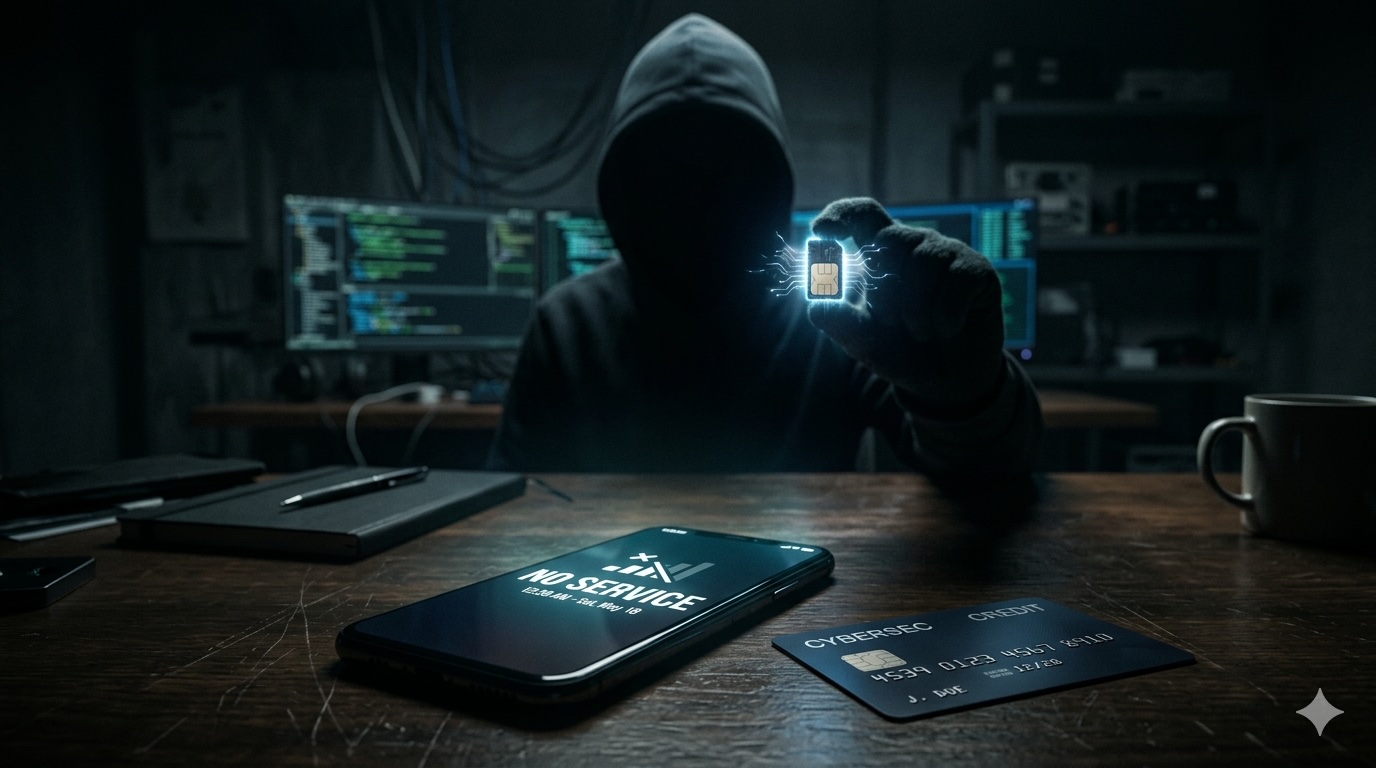
When the swap executes, the target's SIM card is deactivated. The phone number is activated on the attacker's SIM card. This transfer happens at the network level. The target's physical phone is unaffected. The device still works. But the cellular connection dies. The status bar shows No Service or Searching or Emergency Calls Only.
Most victims assume a temporary network outage. They wait for service to restore. They restart their phone. They check if others nearby have service. They do not immediately recognize this as an attack. Minutes pass. Precious minutes during which the attacker is already moving.
The attacker now controls the phone number. Calls to that number ring on the attacker's phone. SMS messages to that number arrive on the attacker's device. The phone number has become a weapon, and the attacker is wielding it.
The telecommunications transfer mechanisms were designed for customer convenience, not security. The process is streamlined. The barriers are minimal. The verification relies on information that is widely compromised. The result is a system where phone numbers can be hijacked through a customer service call or through insider corruption, and the legitimate owner has no advance warning and limited recourse.
The attack does not require technical sophistication. It does not require malware or hacking tools or exploitation of software vulnerabilities. It requires social engineering skills or access to corrupt insiders. Both are abundantly available. The barrier to entry is low. The potential payoff is enormous.
And once the swap is complete, the second phase begins. The phase where the phone number becomes the key that unlocks everything. The phase where SMS-based two-factor authentication transforms from security measure to attack vector. The phase where the victim's entire digital life is compromised in minutes.
The Five-Minute Heist: A Scenario of Total Ruin
It is 2:47 AM. The target is asleep. Their phone sits on the nightstand, charging silently. The screen is dark. The device is locked. Everything is as it should be.
At 2:48 AM, the phone loses cellular connection. The status bar changes. The device is no longer connected to the network. If the target were awake, they might notice. But they are not awake. The phone sits silently, disconnected, while three thousand miles away an attacker holding a different phone receives confirmation that the SIM swap is complete.
The attacker works quickly. Every minute counts. The target will eventually notice the service disruption. They will call the carrier. They will attempt to regain control. Speed is essential.
The attacker opens the email account. The target's Gmail. They click Forgot Password. They enter the email address. Google asks how they want to receive the recovery code. Email is an option but requires access they do not yet have. SMS is an option. The attacker selects SMS. Google sends a six-digit code. The code arrives on the phone in the attacker's hand. The code that was meant to verify the target's identity instead verifies the attacker's control. They enter it. Access granted.
The attacker changes the password immediately. They navigate to security settings. They review recovery options. They remove the target's backup email addresses. They remove the backup phone numbers. They add their own. They enable two-factor authentication on the account using their own device. They are fortifying their position, locking the legitimate owner out while securing their own access.
With email control established, the attacker pivots. They search the inbox for financial services. They find notifications from the target's bank. From their cryptocurrency exchange. From their brokerage account. From payment services. From every platform tied to money.
They start with the cryptocurrency exchange. Coinbase. They navigate to the login page. They enter the target's email. They click Forgot Password. The reset link goes to the email account the attacker now controls. They click the link. They set a new password. The exchange requires two-factor authentication to complete the password reset. It sends an SMS code. The code arrives on the attacker's phone. They enter it. Access granted.
The attacker navigates to the wallet. The target holds Bitcoin. The balance is substantial. The attacker initiates a withdrawal to their own wallet address. The exchange sends a confirmation code via SMS. The code arrives. They confirm. The transaction is broadcast to the blockchain. It is irreversible.
They repeat the process with other cryptocurrency holdings. Ethereum. Litecoin. The amounts aggregate. Tens of thousands of dollars. Perhaps hundreds of thousands. Moving from the target's wallets to addresses the attacker controls. Each withdrawal confirmed with SMS codes arriving at the hijacked phone number.
The attacker moves to the bank account. The major bank's website. They attempt login with the email address. They request a password reset. The link arrives in the compromised email. They follow it. They set a new password. The bank requires additional verification. They send an SMS code. The attacker enters it. They are inside.
They navigate to transfers. They attempt to send money to an external account. The bank has transaction limits. Daily transfer caps. But the limits are high enough. They schedule the maximum allowable transfer to a mule account. They will layer the money through multiple accounts, converting to cryptocurrency, obscuring the trail.
They access the brokerage account. The target has investments. Stocks. Bonds. The attacker cannot instantly liquidate these, but they can initiate sell orders. They can schedule transfers. They can lock the legitimate owner out of their own investments.
It is 2:53 AM. Six minutes have elapsed since the SIM swap. The attacker has compromised email, cryptocurrency exchanges, bank accounts, and brokerage accounts. The financial damage is already catastrophic. But they are not finished.
They access social media accounts. Facebook. Twitter. Instagram. LinkedIn. They change passwords. They post messages from the target's accounts offering cryptocurrency investment opportunities, attempting to scam the target's friends and followers. This is bonus damage. Additional revenue. The social engineering potential of trusted social media accounts.
They search the email for sensitive information. Tax documents. Legal records. Medical information. They download everything. This information can be used for identity theft. For blackmail. For opening fraudulent accounts in the target's name. The digital dossier is comprehensive and damaging.
It is 2:57 AM. Ten minutes since the attack began. The attacker has extracted maximum value from the compromised phone number. They begin covering their tracks. They delete sent items from the email account. They clear browsing history. They adjust settings to minimize notification to the target. They are not done, but the initial heist is complete.
At 6:15 AM, the target wakes. They reach for their phone. They notice the No Service indicator. They are confused. They restart the phone. The problem persists. They begin to worry. They try to call their carrier using WiFi calling, but the feature does not connect. They open their laptop.
They attempt to log into their email. The password does not work. Panic sets in. They request a password reset. The option to send to their phone number is available. They select it. No code arrives. Their service is still disconnected. The alternative is to send to a backup email address, but that option is no longer available. The account has been modified. They are locked out.
They try to access their bank directly. The password fails. They try their cryptocurrency exchange. Locked out. They begin to realize the scope of the disaster. They attempt to call the bank from their landline if they have one, or from a borrowed phone. The wait times are long. When they finally reach someone, the process of verifying their identity and regaining control begins. But hours have passed. The damage is done.
The target eventually learns that their phone number was ported to another device. They learn that their accounts were drained. They learn that their cryptocurrency is gone, irreversibly transferred to untraceable wallets. They learn that their bank account was drained to the daily limit. They learn that their identity has been stolen and is being used to open fraudulent accounts.
The financial loss is devastating. But the psychological damage is worse. The sense of violation. The realization that their security measures were meaningless. The understanding that they did everything they were supposed to do and it was not enough. The knowledge that a single point of failure, their phone number, enabled total compromise of their digital life.
Recovery is slow and incomplete. The bank may eventually restore some funds. The cryptocurrency is gone forever. The credit damage persists. The identity theft creates problems for years. And the fundamental insecurity remains. The phone number is still a vulnerability. SMS two-factor authentication is still broken. The infrastructure is still compromised.
The five-minute heist is not hypothetical. It happens constantly. The victims are numerous. The losses are catastrophic. And the attack will continue as long as SMS-based authentication is treated as secure.
The SS7 Ghost Exploit: Hacking the Global Grid
The SIM swapping attack requires social engineering or insider corruption. It requires convincing a telecommunications employee or bribing one. It requires human interaction and human error. But there is a more sophisticated attack vector that bypasses humans entirely. An exploit that operates at the protocol level of the global telecommunications infrastructure. A vulnerability that allows interception of SMS messages and calls without ever contacting customer service.
This is the SS7 vulnerability. A fundamental flaw in the signaling system that enables international cellular networks to communicate with each other.
SS7, or Signaling System Number 7, is a set of telephony signaling protocols developed in 1975. It enables different telephone networks to exchange information necessary to route calls and SMS messages across networks and international borders. When you travel abroad and your phone connects to a foreign carrier, SS7 is how that carrier knows you are a legitimate roaming subscriber. When you send a text message to someone on a different carrier, SS7 facilitates the delivery.
The system was designed in an era when access to telecommunications infrastructure was tightly controlled. Only telephone companies had access to SS7 networks. The threat model assumed that all parties with SS7 access were trusted entities. Nation-states. Major carriers. Regulated monopolies. The protocols included no authentication mechanisms because authentication between trusted parties seemed unnecessary.
This assumption is catastrophically obsolete.
The global telecommunications infrastructure has expanded and fragmented. Hundreds of carriers exist worldwide. Many operate in countries with minimal regulatory oversight. Access to SS7 networks can be purchased. Criminal organizations have it. Sophisticated hacking groups have it. Intelligence agencies have it. The circle of trusted entities has expanded to include untrusted actors, but the protocols have not changed to reflect this reality.
An attacker with SS7 access can query the Home Location Register to determine which cell tower a target's phone is currently connected to. This provides real-time location tracking. They can intercept SMS messages by redirecting them to their own systems before forwarding them to the legitimate recipient. The target receives their messages with a slight delay and never knows they were intercepted. They can redirect phone calls, listening to conversations or impersonating the target.
The technical execution is complex but the tools exist. SS7 exploitation frameworks are available. Services selling SS7 access advertise openly on certain forums. The barrier to entry is higher than SIM swapping but not prohibitively so. State-sponsored actors certainly have this capability. Sophisticated criminal organizations can acquire it. Even motivated individual attackers with sufficient resources can obtain SS7 access.
The implications for SMS-based authentication are catastrophic. An attacker with SS7 capabilities does not need to hijack the phone number. They simply intercept the authentication codes in transit. The target's phone continues working normally. They receive their SMS messages. But the attacker receives them too. Invisibly. Without any indication of compromise.
The target logs into their bank. The bank sends an SMS code. The SS7 attacker intercepts it. The code also arrives at the target's phone, so the target notices nothing unusual. But the attacker now has the code. They use it to authenticate as the target from a different location. They bypass the two-factor authentication without triggering any alarms.
This attack is silent and sophisticated. The target has no indication of compromise until financial damage appears. There is no No Service disruption. No failed login attempts. No suspicious activity notifications. The authentication codes are being siphoned off in real-time without disrupting normal functionality.
Intelligence agencies have used SS7 vulnerabilities for surveillance for years. The capabilities were documented in leaked documents. Security researchers have demonstrated the attacks at conferences. Telecommunications companies are aware of the vulnerability but replacing SS7 requires replacing global infrastructure. The protocols are deeply embedded. The migration to more secure alternatives like Diameter is slow and incomplete.
For the average user, SS7 exploitation is a more remote threat than SIM swapping. The technical sophistication required is higher. The access to SS7 networks is more restricted. But high-value targets face this threat from advanced persistent threat groups and nation-state actors. Corporate executives. Political figures. Activists. Journalists. Anyone whose communications are valuable to sophisticated adversaries.
The existence of SS7 vulnerabilities demonstrates that SMS interception is not just a matter of social engineering. It is a fundamental protocol-level flaw. The telecommunications infrastructure cannot secure SMS messages because it was not designed to. The security model is trust-based in a world where trust is no longer sufficient.
The combination of SIM swapping and SS7 exploitation represents a complete failure of SMS as an authentication mechanism. SIM swapping defeats it through social engineering. SS7 exploitation defeats it through protocol manipulation. Either way, SMS codes are not secure. They never were. They cannot be made secure without replacing the underlying infrastructure.
And yet financial institutions, social media platforms, email providers, and countless other services continue to offer SMS-based two-factor authentication. Many offer it as the only option. They are building security on fundamentally insecure foundations. They are telling users they are protected when they are not. They are perpetuating the false comfort of the SMS code.
The telecommunications companies bear enormous responsibility. They operate infrastructure with known critical vulnerabilities. They allow phone numbers to be ported with inadequate verification. They grant SS7 access without rigorous vetting. They prioritize service convenience over security. And when attacks occur, the victims bear the losses while the carriers face minimal consequences.
The ghost exploit in the SS7 protocol is a permanent vulnerability. It cannot be patched with software updates. It requires infrastructure replacement on a global scale. Until that replacement occurs, SMS interception will remain possible for attackers with sufficient resources and access. And SMS-based authentication will remain fundamentally compromised.
The Lockdown Protocol: Killing the SMS Dependency
The threat is clear and persistent. SIM swapping can hijack your phone number through social engineering or insider corruption. SS7 exploitation can intercept your SMS messages through protocol manipulation. SMS-based two-factor authentication is broken beyond repair. Continuing to rely on it is choosing vulnerability.
But you are not powerless. You can eliminate your dependency on SMS authentication. You can implement stronger authentication methods. You can lock down your accounts and your telecommunications service. This is your lockdown protocol.
Step one: abandon SMS two-factor authentication immediately for all critical accounts. Critical means any account that provides access to money or personal information. Banks. Cryptocurrency exchanges. Email. Investment accounts. Payment services. These accounts must not use SMS codes. The risk is unacceptable. The alternatives are available.
Migrate to authenticator apps. These applications generate Time-Based One-Time Passwords known as TOTP. The apps use a cryptographic algorithm that generates six-digit codes that change every thirty seconds. The algorithm is based on the current time and a secret key shared between the app and the service during setup.
Google Authenticator is the most widely known. Authy provides additional features like encrypted cloud backup. Microsoft Authenticator integrates with Microsoft services. 1Password includes TOTP generation. All function on the same principle. The secret key never leaves your device. The codes are generated locally. No SMS transmission. No telecommunications infrastructure dependency. No interception possible.
Setting up an authenticator app is straightforward. The service provides a QR code containing the secret key. You scan the code with your authenticator app. The app stores the secret and begins generating codes. When you log in, you open the app and enter the current six-digit code. The service verifies the code matches what their algorithm generates at that moment. Authentication succeeds.
The security improvement over SMS is substantial. An attacker who SIM swaps your phone number gains nothing. The codes are not sent to your phone number. They are generated on your physical device using a secret that was never transmitted. Without physical access to your device, the attacker cannot generate valid codes.
Loss of your phone becomes a different risk. If you lose the device containing your authenticator app, you lose access to your accounts. This is why backup codes are critical. When you enable TOTP on an account, the service provides a set of one-time-use backup codes. These codes can authenticate you if you lose your device. Store these codes securely. Print them. Keep them in a safe. Store them in a password manager. Do not store them on the same device as the authenticator app.
Some authenticator apps like Authy support encrypted cloud backup. Your secrets are encrypted and stored in the cloud, allowing you to restore them on a new device. This convenience reduces the risk of permanent lockout but introduces the risk that your cloud account becomes a target. The encrypted backup is only as secure as your cloud account credentials. Strong password and strong authentication for that account are essential.
Step two: implement hardware security keys for your most critical accounts. Hardware keys represent the strongest practical authentication available to consumers. YubiKey is the best-known brand. Google Titan Keys provide an alternative. These are physical devices that use public key cryptography to authenticate you.
During setup, you insert the key into your computer's USB port or tap it to your phone via NFC. The service and the key establish a cryptographic relationship. The key stores a private cryptographic secret. The service stores the corresponding public key. When you log in, you enter your password and then insert or tap your security key. The service sends a challenge. Your key signs the challenge with its private key. The service verifies the signature with the public key. Authentication succeeds.
The security model is cryptographically robust. The private key never leaves the hardware device. It cannot be phished. Even if an attacker perfectly replicates the service's website and tricks you into entering your password, they cannot authenticate without your physical security key. Phishing attacks fail completely against hardware keys.
SIM swapping becomes irrelevant. The attacker can control your phone number, compromise your email, intercept all your SMS codes. Without your physical security key, they cannot authenticate. The hardware key breaks the attack chain.
The limitation is adoption. Not all services support hardware keys. Many banks still do not. Some cryptocurrency exchanges do. Google accounts support them. GitHub supports them. Gradually, support is expanding. Where hardware keys are available for critical accounts, use them. The security improvement is decisive.
Step three: place a port freeze on your mobile account. Contact your carrier and request that your account be locked against porting. You establish a PIN that must be provided before your phone number can be transferred to another carrier or to another SIM card. Without this PIN, porting should not be possible.
The effectiveness of port freezes varies by carrier. Some implement them rigorously. Some are inconsistent. Some allow customer service representatives to override the freeze with sufficient social engineering. But even imperfect protection is better than none. The freeze creates an additional barrier that opportunistic attackers may not overcome.
When establishing the PIN, choose something strong and unique. Not your birthday. Not the last four of your Social Security number. Not information an attacker might obtain from data breaches. A random number or passphrase stored securely in your password manager. Do not store it in a location that would be compromised if your email is compromised.
Contact your carrier regularly to verify the port freeze remains active. Carriers have been known to remove protections due to system updates or errors. The port freeze is only effective if it is actually in place.
Step four: minimize the attack surface by removing phone numbers from accounts where they are not essential. Many services request your phone number for account recovery. This is convenient. It is also a vulnerability. If you have enabled TOTP or hardware keys, you do not need SMS recovery. Remove the phone number. Reduce the number of accounts where compromising your phone number grants access.
For accounts that require a phone number, consider using a VoIP number from a service like Google Voice rather than your primary cellular number. This separates your authentication phone number from your daily-use number. An attacker who SIM swaps your cellular number does not gain access to accounts tied to your VoIP number. This compartmentalization limits damage.
Step five: use a password manager to generate and store unique passwords for every account. This prevents credential stuffing attacks. If one service is breached, your password for that service cannot be used on other services. The password manager itself must be secured with a strong master password and preferably a hardware key. The password manager becomes a critical single point of failure that must be hardened accordingly.
Step six: enable all available account security features. Login alerts. Unrecognized device notifications. Geographic restrictions. IP allow lists. Any feature that provides visibility into account access or restricts access conditions. These do not prevent attacks but they provide early warning. When your bank sends a login alert for an access you did not perform, you know to investigate immediately.
Step seven: monitor for SIM swap indicators. If your phone suddenly loses service, assume you are under attack. Do not wait to investigate. Use another device to check your email, your bank, your cryptocurrency exchanges. Change passwords immediately using devices that are known secure. Contact your carrier from a different phone and demand they reverse the port. Time is critical. Every minute of delay allows attackers to do more damage.
Step eight: educate yourself about your carrier's procedures and your rights. Know how to report unauthorized ports. Know the escalation procedures. Know the regulatory agencies that oversee telecommunications in your jurisdiction. Carriers are often unresponsive to individual victims but regulatory complaints force action.
Step nine: consider the nuclear option for high-value accounts. Some cryptocurrency holders and high-net-worth individuals establish accounts using email addresses not tied to any phone number. They use only TOTP and hardware keys for authentication. They disable all phone-based recovery. This eliminates phone numbers from the attack surface entirely. The risk of permanent lockout increases but the risk of SIM swap theft decreases to zero.
Step ten: accept that convenience and security are opposing forces. SMS two-factor authentication is convenient. It requires no additional apps. No hardware keys. No setup beyond entering your phone number. This convenience is why it was widely adopted. But convenient is not secure. The lockdown protocol is less convenient. It requires more steps. More devices. More planning. This is the cost of security against attacks that can drain your accounts in minutes.
The telecommunications infrastructure is not going to be fixed. SS7 will not be replaced overnight. Carriers will not suddenly implement rigorous verification for SIM transfers. The vulnerabilities are structural and persistent. You cannot wait for the industry to solve the problem. You must eliminate your dependency on the broken infrastructure.
Your phone number is a public identifier, not a secret. SMS codes are transmitted over insecure protocols through infrastructure with known critical vulnerabilities. This is not theoretical. It is documented. It is exploited. It will continue to be exploited.
Authenticator apps and hardware keys are not perfect. They have their own risks and limitations. But they are orders of magnitude more secure than SMS. They eliminate entire categories of attacks. They remove your dependency on telecommunications infrastructure you do not control.
The lockdown protocol is not optional for anyone with assets worth stealing or an identity worth compromising. It is the minimum viable security posture in a threat landscape where phone numbers can be hijacked and SMS codes can be intercepted. The implementation requires effort. The ongoing maintenance requires diligence. But the alternative is vulnerability to attacks that have stolen millions of dollars from victims who believed SMS codes kept them safe.
The 2FA illusion is shattered. The SMS code is not security. It is a liability. The lockdown protocol eliminates that liability. The choice is yours. Continue trusting broken infrastructure and hope you are not targeted. Or implement real security and remove yourself from the pool of vulnerable victims.
The attackers are sophisticated. They are patient. They are relentless. But they target the path of least resistance. When you remove SMS from your authentication chain, you cease to be an easy target. When you implement hardware keys, you become difficult to compromise. When you lock down your telecommunications account, you create barriers.
Security is never absolute. But security can be sufficient. Sufficient to make you too difficult, too expensive, too time-consuming for most attackers to bother with. Sufficient to survive the threat landscape we actually inhabit rather than the one we wish existed.
The SMS code arriving on your phone is not protecting you. It is exposing you. Kill the dependency. Implement the lockdown protocol. Secure your accounts with authentication methods that were designed for adversarial environments. The cost of action is inconvenience. The cost of inaction is potential ruin.
Choose carefully.